What is 90% Junk Silver?
90% silver, often called "junk silver," refers to U.S. dimes, quarters, and half dollars minted before 1965. These coins contain 90% silver and 10% copper. They were made for everyday circulation, not for collectors, which is where the "junk" label comes from. It has nothing to do with quality. It just means the coins have no significant numismatic value above their silver content.
When the U.S. moved away from silver coinage in 1965, these coins became a finite resource. No more are being made. Everything that exists is all there will ever be. Stackers have recognized that for decades.
"Junk silver" is one of the most misleading terms in the hobby. There's nothing junk about it. These are real U.S. coins with real silver content that you can hold, trade, and sell anywhere in the world.
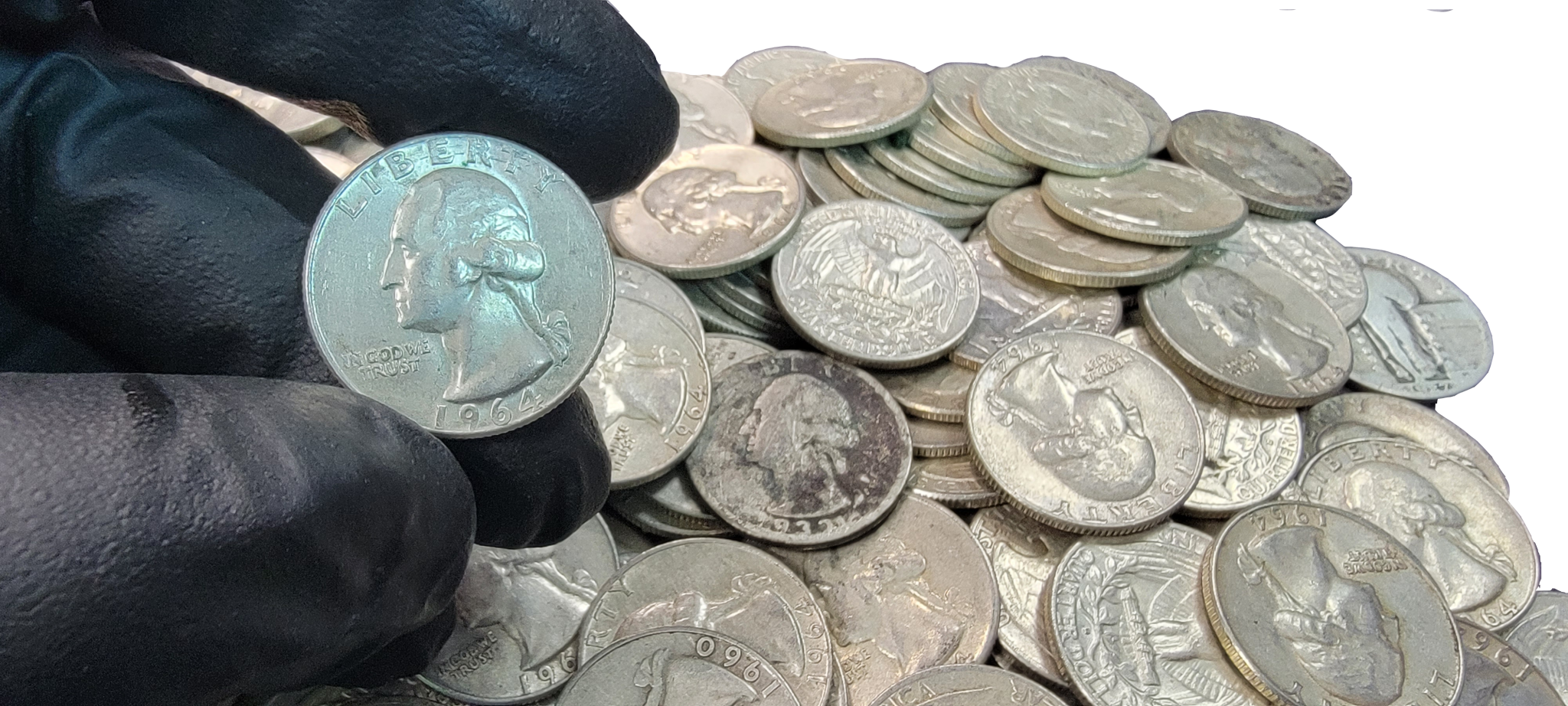
A handful of 90% silver coins: dimes, quarters, and halves from before 1965.
Which Coins Count
Any U.S. dime, quarter, or half dollar dated 1964 or earlier is 90% silver. That covers a wide range of designs across multiple denominations.
| Coin | Years | Silver Oz (BU) | Common Designs |
|---|---|---|---|
| Dime | Pre-1965 | 0.07234 oz | Mercury, Roosevelt |
| Quarter | Pre-1965 | 0.18084 oz | Washington |
| Half Dollar | Pre-1965 | 0.36169 oz | Walking Liberty, Franklin, Kennedy (1964 only) |
| Silver Dollar | Pre-1936 | 0.77344 oz | Morgan, Peace |
Silver dollars (Morgan and Peace dollars) are also 90% silver but they're typically traded separately from junk silver bags due to their higher per-coin value and collector appeal. You'll rarely find them lumped into a $100 face bag at a coin show.
Other 90% silver coins exist (1992-S and later proof coins, for example) but these have collector premiums well above melt value and aren't what people mean when they say "junk silver."
Calculating Melt Value
This is where most people get tripped up, but it's actually straightforward once you know the key number.
A brand new uncirculated 90% coin contains 0.7234 oz of silver per $1 face. But most circulated junk silver has some wear, so the industry standard is 0.715 oz per $1 face, adjusted for average circulation wear. This is what dealers use.
Add up the face value of your coins in dollars. Ten dimes = $1.00. Four quarters = $1.00. Two halves = $1.00. Easy.
A $10 face bag contains approximately 7.15 troy oz of silver. A $100 face bag contains approximately 71.5 troy oz.
With silver at $30/oz, a $10 face bag has a melt value of roughly $214.50. At $75/oz, that same bag is worth about $536.25.
Enter any face value and get the live melt value instantly. No math needed.
It's also worth knowing: it takes approximately $1.40 in face value to equal one troy ounce of silver in 90% coins. So if you're trying to accumulate a full ounce at a time, you need about $1.40 face per ounce.
What About 40% Silver?
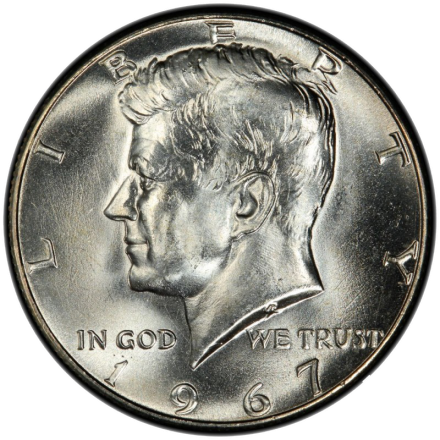
When the U.S. reduced silver content in 1965, they didn't go straight to zero on half dollars. Kennedy halves from 1965 through 1969 are 40% silver, a transitional composition before going fully clad in 1970.
These aren't usually included in standard 90% junk silver bags. They trade separately and at a lower multiple since there's less silver per coin. The silver content of a 40% Kennedy half is approximately 0.1479 troy oz.
Quick check: if a Kennedy half is dated 1964, it's 90% silver. 1965–1969, it's 40%. 1970 and later, it's clad with no silver at all. The edge tells you too: a solid silver edge means silver, a visible copper stripe means clad.
Buying and Selling
Where to Buy
90% silver is sold by virtually every online bullion dealer and most local coin shops. It commonly comes in $1, $10, $50, and $100 face value bags or rolls. Premiums on junk silver are typically lower than on government-minted bullion coins like Silver Eagles, making it one of the most cost-effective ways to stack silver by the ounce.
Coin shows are an excellent place to buy. You can inspect the coins, negotiate directly, and sometimes find better deals than online. Mid-America Coins does several shows in the Tulsa area each year and is a solid source.
Where to Sell
Selling is generally straightforward. Most reputable coin shops and bullion dealers will buy 90% silver. Some dealers count by face value, others weigh the coins. Either way they'll make an offer based on current spot price. Expect to receive somewhere between 70% and 95% of spot depending on the dealer and market conditions. Shop around.
Banks typically will not buy junk silver. If you take your coins to a bank they'll likely swap them for face value only and you'd lose all the silver premium. Sell to a dealer or private buyer instead.
How Dealers Price It
Most dealers price 90% silver as a multiple of face value or as a price per troy ounce using the 0.715 factor. You'll often hear "$X times face." So "15 times face" at $30 spot means the dealer is paying $15 for every dollar of face value in your coins (which works out to about $21/oz).
Reasons to Stack (and Not To)
- Widely recognized. Most dealers know these coins well. Authentication is rarely an issue.
- Finite supply. No more are being made. What exists is all there will ever be.
- Affordable fractional silver. A dime gives you a tiny piece of silver at low cost, much cheaper than fractional bullion with high premiums.
- Historical significance. Real U.S. circulation coins with genuine history.
- Low premiums. Generally cheaper per oz than Silver Eagles or Maples.
- Heavy and bulky. 90% silver is 10% copper, and a lot of coins weighs a lot. Storage can be a challenge.
- The math. Not everyone is comfortable with the 0.715 factor. It trips people up at coin shows.
- Still legal tender. Real risk of accidentally spending your silver coins. It happens.
- Condition varies. Circulated coins range from fine to heavily worn. What you get in a bag is what you get.
Frequently Asked Questions
How do I know if a coin is silver?
Check the date. Any U.S. dime, quarter, or half dollar dated 1964 or earlier is 90% silver. You can also check the edge: a solid silver-colored edge means silver, a visible copper stripe means clad. This is especially useful for Kennedy halves where date alone doesn't tell the full story.
What's the difference between face value and melt value?
Face value is what the coin says on it: a dime says 10 cents, a quarter says 25 cents. Melt value is what the silver inside it is actually worth at today's spot price. A dime with a face value of $0.10 might have a melt value of $5 or $6 when silver is at $75/oz. The two numbers have almost nothing to do with each other.
Are Morgan and Peace dollars considered junk silver?
They're 90% silver, but they're not typically lumped in with "junk silver" because they carry collector premiums and trade differently. A Morgan dollar is almost always worth more than pure melt value because of its age, design, and collector demand. Junk silver refers to coins with no numismatic premium, just metal value.
Can I use regular coins from my change?
Post-1964 U.S. dimes and quarters are clad with no silver content. The only circulating silver coins you might find in change today would be pre-1965 coins that slipped through, which does still happen occasionally. It's worth looking, but don't count on it.
What's a realistic premium over spot to pay?
A fair premium on 90% junk silver is typically 3-10% over spot for a standard bag from a reputable dealer. Higher premiums can happen in tight markets. Anything over 15% above melt value is steep. The Stack Heavy Premium Tracker shows historical premium data if you want to see how the market has moved.
Watch the Full Walkthrough
Silver Seeker put together a comprehensive video covering everything in this guide and more. If you prefer to watch rather than read, this is a great place to start.
Use the Junk Silver Quick Calc for instant face-value-to-melt lookups, or the full Melt Value Calculator for detailed coin-by-coin totals.